Showing posts with label Marie Antoinette. Show all posts

Thursday, January 15, 2015

November Books of the Month

Normally I feature just one book that I feel that readers would enjoy but this month we have a plethora of really cool books.

Title:  Writers Between the Covers
Authors: Shannon McKennon Schmidt & Joni Rendon
Paperback: 256 pages
Publisher: Plume (October 29, 2013)

Why did Norman Mailer stab his second wife at a party?  Who was Edith Wharton’s secret transatlantic lover? What motivated Anaïs Nin to become a bigamist?

Writers Between the Covers rips the sheets off these and other real-life love stories of the literati—some with fairy tale endings and others that resulted in break-ups, breakdowns, and brawls. Among the writers laid bare are Agatha Christie, who sparked the largest-ever manhunt in England as her marriage fell apart; Arthur Miller, whose jaw-dropping pairing with Marilyn Monroe proved that opposites attract, at least initially; and T.S. Eliot, who slept in a deckchair on his disastrous honeymoon.

From the best break-up letters to the stormiest love triangles to the boldest cougars and cradle-robbers, this fun and accessible volume—packed with lists, quizzes and in-depth exposés—reveals literary history’s most titillating loves, lusts, and longings.


Title: Marie Antoinette's Head: The Royal Hairdresser, the Queen, and the Revolution
Author:  Will Bashor
Publisher:  The Lyon's Press
About:  Marie Antoinette has remained atop the popular cultural landscape for centuries for the daring in style and fashion that she brought to 18th century France. For the better part of the queen’s reign, one man was entrusted with the sole responsibility of ensuring that her coiffure was at its most ostentatious best. Who was this minister of fashion who wielded such tremendous influence over the queen’s affairs? Marie Antoinette’s Head: The Royal Hairdresser, The Queen, and the Revolution charts the rise of Leonard Autie from humble origins as a country barber in the south of France to the inventor of the Pouf and premier hairdresser to Queen Marie-Antoinette.

By unearthing a variety of sources from the 18th and 19th centuries, including memoirs (including Léonard’s own), court documents, and archived periodicals the author, French History professor and expert Will Bashor, tells Autie’s mostly unknown story. Bashor chronicles Leonard’s story, the role he played in the life of his most famous client, and the chaotic and history-making world in which he rose to prominence. Besides his proximity to the queen, Leonard also had a most fascinating life filled with sex (he was the only man in a female dominated court), seduction, intrigue, espionage, theft, exile, treason, and possibly, execution. The French press reported that Léonard was convicted of treason and executed in Paris in 1793. However, it was also recorded that Léonard, after receiving a pension from the new King Louis XVIII, died in Paris in March 1820. Granted, Leonard was known as the magician of Marie-Antoinette’s court, but how was it possible that he managed to die twice?

Title:  Marie Antoinette Serial Killer
Author:  Katie Alender
Publisher: Scholastic Books
Pub Date:  9/24/2013
Overview:  Heads will roll! Paris, France: a city of fashion, chocolate croissants, and cute boys. Colette Iselin is thrilled be there for the first time, on her spring break class trip.
But a series of gruesome murders are taking place around the city, putting everyone on edge. And as she tours the sights, Colette keeps seeing a strange vision: a pale woman in a ball gown and powdered wig, who looks like Marie Antoinette.

Colette knows her status-obsessed friends won't believe her, so she seeks out the help of a charming French boy. Together, they discover that the murder victims are all descendants of people who ultimately brought about Marie Antoinette's beheading. The queen's ghost has been awakened, and now she's wreaking her bloodthirsty revenge.
 
And Colette may just be one of those descendants . . . which means she might not make it out of this trip alive. Acclaimed author Katie Alender brings heart-stopping suspense to this story of betrayal, glamour, mystery, history--and one killer queen.

Title:  Mrs. Poe
Author:  Lynn Cullen
Publisher:  Simon & Schuster
Pub Date:  10/1/2013
 
Overview:  1845: New York City is a sprawling warren of gaslit streets and crowded avenues, bustling with new immigrants and old money, optimism and opportunity, poverty and crime. Edgar Allan Poe’s “The Raven” is all the rage—the success of which a struggling poet like Frances Osgood can only dream. As a mother trying to support two young children after her husband’s cruel betrayal, Frances jumps at the chance to meet the illustrious Mr. Poe at a small literary gathering, if only to help her fledgling career. Although not a great fan of Poe’s writing, she is nonetheless overwhelmed by his magnetic presence— and the surprising revelation that he admires her work.

What follows is a flirtation, then a seduction, then an illicit affair . . . and with each clandestine encounter, Frances finds herself falling slowly and inexorably under the spell of her mysterious, complicated lover. But when Edgar’s frail wife Virginia insists on befriending Frances as well, the relationship becomes as dark and twisted as one of Poe’s tales. And like those gothic heroines whose fates are forever sealed, Frances begins to fear that deceiving Mrs. Poe may be as impossible as cheating death itself. . . .

Wednesday, January 14, 2015

Duchess of Windsor's Jewels on Sale at Sotheby's


The late Duchess of Windsor's jewels went on sale again at Sotheby's. The items up for grabs include this gorgeous bracelet made by Cartier.  The Duke gave his bride many beautiful gifts during their long marriage.  Rumor has it that Madonna has bid on several pieces.  She's currently directing a movie called W.E. about the Windors.  20 pieces of jewelry were sold Tuesday night for 8 million pounds which is roughly I would say almost $16 million dollars.

Here is an article from Hello Magazine regarding the sale and one from the Daily Mail in the UK about the sale itself.  Apparently the Duke didn't always pay for the jewelry that he bought for the Duchess or the jewelers had to wait for a long time for their money.  Perhaps he thought that just the fact that he bought the jewelry and the Duchess was wearing it was payment enough, instead of giving them cold hard cash!

If you had the money, would you have bid on an item from the collection?  Whose jewelry would you like to own? Personally I would love the diamond necklace that caused all the fuss during Marie Antoinette's reign.

Happy Birthday Marie Antoinette and Giveaway

Happy Birthday to Marie Antoinette who was born today (as well as myself and Leah Marie Brown!).  To celebrate Marie's birthday (and mine), I am giving away 2 copies of Carolyn Meyer's YA novel THE BAD QUEEN.  Here is a sneak peek:

History paints her as a shallow party girl, a spoiled fashionista, a callous ruler. Perhaps no other royal has been so maligned—and so misunderstood—as Marie-Antoinette. From the moment she was betrothed to the dauphin of France at age fourteen, perfection was demanded of Marie-Antoinette. She tried to please everyone—courtiers, her young husband, the king, the French people—but often fell short of their expectations. Desperate for affection and subjected to constant scrutiny, this spirited young woman can’t help but want to let loose with elaborate parties, scandalous fashions, and unimaginable luxuries. But as Marie-Antoinette’s lifestyle gets ever-more recklessly extravagant, the peasants of France are suffering from increasing poverty—and becoming outraged. They want to make the queen pay.

 
In this latest installment of her acclaimed Young Royals series, Carolyn Meyer reveals the dizzying rise and horrific downfall of the last queen of France. Includes historical notes, an author’s note, and a bibliography.

Here are the rules for the giveaway. Sorry, this is only for Canadian and American readers! The contest runs from today through Monday, November 8th. 

 
1. Leave your name and email in the comments.  Email is very important so that I can contact you for your address.
2. If you are not a follower and become one, you get an extra entry
3. If you tweet about the giveaway, you get an extra entry.
Good luck!

The Winner of the Marie Antoinette Giveaway is.....


I'm so pleased by how many people stopped by and left comments on Juliet Grey's excellent post.  I wish I could give you all copies of this wonderful book, but unfortunately I can't!  Using random.org, I can announce that the winner of BECOMING MARIE ANTOINETTE is....

Laura Kay

Congratulations Laura!  I will be emailing you shortly to get your address.

Thank you to everyone who entered! I hope you will keep coming back to Scandalous Women, as I bring you more scintillating stories about some of history's most fascinating women.

Marie Antoinette's Birth Chart


Since Marie Antoinette and I share a birthday, every year I've done a Marie Antoinette themed post. This year, I thought I would examine Marie's birth chart. I've copied the chart from a web-site called astrotheme. If you want to read a longer more in depth version of Marie's birth chart, you can do so at the web-site. I read somewhere on line that when Marie Antoinette was born, an astrologer predicted that she would lead an unhappy life, and her eventual fate. I'm pretty sure that is just a myth. Marie Antoinette was born during the Age of Enlightenment, the era when Kings or Queens had a court astrologer were more than likely over.

I do think that you can learn a lot about a person from a pyschological standpoint by looking at their birthchart. Certainly pyschoanalysts like Carl Jung were fascinating by what a birth chart can reveal about a person. I've personally always been fascinated by astrology ever since I was old enough to know exactly what it was. I'm just going to look at a few key themes in Marie's chart, primarily her Sun, Moon, Venus and Rising Sign.

Marie Antoinette was born on November 2nd in Vienna at 7:30 in the evening. At the time of her birth Cancer was rising, the Sun was in Scorpio, Her Moon was in Libra and her Venus is in Scorpio as well. The Queen's chart is very much balanced between the elements of Water and Earth with a little fire and not much Air.


Sun in Scorpio According to Debbi Kempton-Smith's book people who have the Sun in Scorpio hate and love with equal intensity that lasts forever. That certainly is true of Marie Antoinette. The people that she loathed like Cardinal de Rohan, she loathed, and the people that she loved like Axel Fersen and the Princesse de Lamballe, and the Duchesse de Polignac she loved fervently. People with Sun in Scorpio also are incredibly loyal to the point of stupidity. And Marie Antoinette was certainly a loyal friend, even after she realized that she and the Princesse de Lamballe didn't really have that much in common, she stayed loyal. The same with the Duchesse de Polignac. Sadly her loyalty wasn't often rewarded. Scorpios are also stubborn, and that is true of Marie Antoinette. Once she made up her mind about something or someone, it was very hard for her to change her mind. Witness the whole brouhaha over Madame de Barry who she famously snubbed. It took a great deal of convincing to get Marie Antoinette even to speak to her. Also, no one could get Marie Antoinette to do anything that she didn't want to do. Her mother, the Empress Maria Theresa, constantly wrote her letters exhorting her to stop riding so much, to spent more time studying, and Marie much of the time ignored her mother's exhortations.

In her natal chart, the Sun is in the 5th House. Without giving birth to a fulfilling work, or to a child, and without enjoying the thrills of a passionate and dramatic love, life is meaningless. This is certainly true of Marie Antoinette. It wasn't until she had her children that she felt really fulfilled as a woman, that her life had purpose. Once her daughter was born, she began to give up the frivolous pursuits that had filled her life when she first arrived in France. Scorpios also tend to be very private, another reason why Marie created her own little oasis at the Petit Trianon, to have some privacy from always having to be on display, which she hated.

Marie Antoinette's Rising Sign is Cancer. Your rising sign is the face that you present to the world, while your Sun is more your Ego. People with their rising sign in Cancer can be dreamy, which Marie Antoinette certainly was as a child. With this Ascendant, they also have a very warm personality which Marie Antoinette had in spades. Cancers also tend to be homebodies. Marie Antoinette created a home for herself at the Petit Trianon which even the King had to be invited to. That was her own personal space, an oasis where she retreated when the rigid etiquette of the Court at Versailles became too much for her. There Marie Antoinette dressed more casually then she did at Court, where the gauze dresses that later became fashionable.

Marie Antoinette's Moon is in Libra (as is mine): The moon represents the feminine side of the personality. For a woman, the Moon is almost as important as the Sun and the Ascendant. Libra is the sign of balance, Librans would rather have a discussion than fight. Librans are also very sociable. People with their Moon in Libra know how to flatter, and flirt. Marie Antoinette was known for being very flirtatious, but she rarely flirted with intent. In fact her flirting with men at court was often misunderstood. Women with Moon in Libra also are very feminine which Marie Antoinette certainly was very much so. According to Debbi Kempton Smith's book Secrets from a Star-Gazer's Notebook, people with Moon in Libra "give the best gift of all, themselves, wholeheartedly. They get stepped on for their kindness." Librans also live to make other people happy. Marie Antoinette was certainly a people-pleaser in many ways, and easily influenced when she was younger.


And finally, Marie Antoinette's Venus is in Scorpio. Venus represents how one expresses love while Mars represents how one expresses anger and passion. People with Venus in Scorpio are able to love to distraction and to hate at the same time. Marie Antoinette was certainly very passionate in regards to her friends, if not towards the King. Someone with Venus in Scorpio would not be happy with an unsatisfactory love life. Although historians are divided about whether or not she had an affair with Axel Fersen, I think that with her Venus in Scorpio, if Marie Antoinette fell in love with someone deeply, she would want to take the risk to take that next step. Love and sex would be entertwined for her.

I hope this brief glimpse into Marie Antoinette's birthchart has been interesting.

Guest Post - Author Juliet Grey on Marie Antoinette et Madame du Barry: Scandalous Women - Scandalous Rivalry

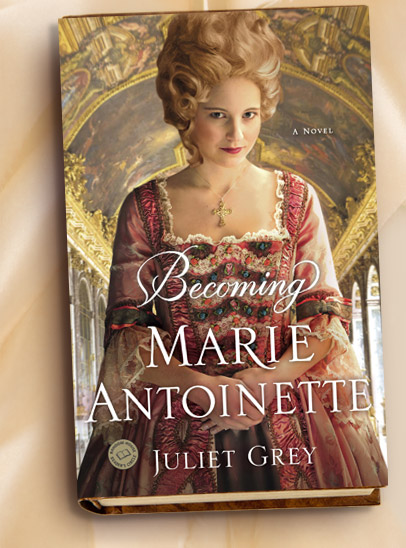
Scandalous Women is very pleased to welcome historical fiction author Juliet Grey to the blog.  Juliet is the author of the new trilogy about Marie Antoinette, the first book BECOMING MARIE ANTOINETTE is released today.  Regular readers of my blog know that I am a huge fan of Marie Antoinette, in fact I'm a tad obsessed and have been ever since I learned that she and I shared a birthday. So I was very excited to hear that there was going to be new trilogy that examined her life from her childhood to her death. Isn't the cover gorgeous?

Above the strains of the violins and the tinkling of crystal and porcelain, a silvery laugh pierced the air, drawing all attention toward the head of the table. The woman seated at the king’s right had grabbed a morsel off the royal plate with a heavily jeweled hand and popped it into her own mouth. She wore no powder in her flaxen hair, a shade or two more yellow than my own. Her complexion was the color of fresh dairy cream—the better to show off her enviable poitrine in a gown of silver tissue spun with gold and spangled with rubies from a sprinkling of them on her sleeves to a crimson crust that framed her deep décolleté. The sapphires in her ears and the triumph in her eyes lent her more airs of an empress than Maman ever had. My eyes strayed downwards. Immediately I felt inadequate and wished that my own bosom was as pulchritudinous and had been molded to such perfection.

I gazed at her coiffure, which sparkled with emerald combs. Perfectly applied circles of rouge enhanced her natural blush. I surveyed the length of the table; here sat the highest-ranking nobility of France and yet none of the women were so bedecked in brilliants as this fascinating creature, who was so bold as to eat off the king’s plate. I could not take my eyes off her. She took another bit of squab from His Majesty’s dish and fed it to him. Louis took not only the pigeon but her fingers into his mouth, enjoying both with gustatory relish. He shared a full-bellied laugh with the woman.


“What an intriguing person!” I exclaimed. I turned to address Madame de Noailles. “S’il vous plait, madame la comtesse, dîtes -moi—qui est cette belle dame-là? Tell me, who is that very beautiful woman—and what is her office here at court?”


My dining companions grew silent. Madame Etiquette’s back stiffened perceptibly. At the far end of the room, Louis of France and his personal guest of honor paid no heed to anything other than their amusing little game of feeding each other. Mesdames tantes muttered behind their fans in voices too low for me to discern the gist of their discourse. All I could hear, and the word was uttered repeatedly with a derisive intonation, was “elle”—her.


The aunts looked to the comtesse de Noailles to furnish a reply; after all, I had posed the question to her directly. All three, Adélaïde, Victoire, and Sophie, had screwed their mouths into odd little smirks that I did not understand. The dauphin coughed quite audibly into his napkin. His younger brothers stifled a snicker and collectively regarded my dame d’honneur through narrowed eyes, waiting with undisguised amusement for her answer.


“That woman,” began the comtesse, speaking with painstaking deliberateness—and I had yet to hear her speak so slowly—“that woman is Madame du Barry, ci-devant—formerly—the lowly Jeanne Bécu, although some knew her as Mademoiselle l’Ange of the rue de la Jussienne; and her office is to . . . to amuse the king!”


Her nickname, Mademoiselle l’Ange, intrigued me. The Angel. Surely I appeared more seraphic; and it would be my pleasure to charm His Majesty and make him laugh. “Well, then!” I clapped my hands with glee, for nothing would have made me happier than to delight my new grand-père. “I shall be her rival,” I exclaimed.


The dauphin, his brothers and aunts, and most particularly Madame de Noailles, froze as if a portraitist had asked them to hold a pose—cutlery and crystal goblets held aloft, halfway between the table and their lips.


Was it something I had said?

That excerpt is from BECOMING MARIE ANTOINETTE, the first novel in my trilogy about the life of the doomed last queen of France. In May 1770, the fourteen-year-old Marie Antoinette arrived at Versailles from her native Austria, already wed by proxy to the dauphin, or heir to the throne, the fifteen-year-old Louis Auguste, grandson to the aging, if still debonair, Louis XV.

The young dauphine’s head had been transformed quite literally, both inside and out, in order to make her more attractive to French tastes. Her head had been crammed with French history and she was still mastering the intricacies of the court etiquette laid down by the Sun King Louis XIV. But one subject left off the syllabus was the subject of the king’s voluptuous maîtresse en titre, or official mistress (an actual position in the French court), Madame du Barry. Marie Antoinette’s mother, the formidable Hapsburg empress Maria Theresa was a devout woman who took an exceptionally dim view of adultery, particularly as her late husband (to whom she had been devoted; their royal marriage had been the rare love match) had a paramour, the Princess Auersperg. Maria Theresa had not wished her daughter to learn anything about Madame du Barry’s existence, which unfortunately placed the already naïve adolescent in an inferior strategic position when it came to the machinations of the court.

Marie Antoinette had been instructed to please the French king in all things; so at first, assuming that the luscious blond comtesse du Barry was merely the sovereign’s good friend, the young dauphine treated her warmly. But she soon found out what the comtesse actually did at court, and what her background was. Coached by Mesdames, the king’s daughters, a trio of thirty-something, bitter, backbiting virgins, Marie Antoinette was determined never to countenance the comtesse again.

Jeanne Bécu (1743-93) had a string of lovers before she met the comte du Barry, a professional pimp, who groomed her for Louis XV’s bed. She was the Marilyn Monroe of her day, full-breasted, with a cloud of flaxen blond hair (that needed a lot of maintenance, as it started out brown) floating to her waist and a little-girl lisp that may or may not have been affected, as necessary, to charm important men. She had worked as a milliner’s assistant and so she knew good taste when she saw it. She’d also been groomed to converse with the great minds of the day in posh Parisian salons and to be a tolerable singer and musician—in short, the ultimate courtesan.

One spring day in 1768, Jeanne cleverly managed to be in the right place at the right time (stationing herself on a staircase at Versailles that the king would have to descend on his way to Mass) and once she caught his eye, she never let it go. Louis became smitten for life. She could not be a maîtresse en titre unless she was of noble birth and so he elevated her. He married her off to the comte du Barry’s older brother, although she was styled a comtesse. In order to be presented at court and ride in the king’s carriage one had to show noble lineage dating to the year 1400, so in 1769 the king invented a coat of arms for her. He even devised a motto (cribbed from the Irish Barrymore family’s motto), Boutez en avant—“Push forward.” And Louis was such an obliging lover that he even shaved a few years off her age.

The comtesse du Barry was soon the most influential person at court. No matter how much they disapproved of her low breeding, everyone curried favor with her in order to gain access to the king and remain in his good graces—that is, until headstrong, fourteen-year-old Marie Antoinette was finally made to understand who and what she was. Marie Antoinette’s Maman had taught her to despise adulterers and whores; she might have been little more than a child but because the queen was deceased, she was the first woman in France and would not be superseded by a harlot.

Their rivalry nearly sparked an international crisis. In 1771, Austria needed France to look the other way as she was about to join forces with Prussia and Russia to partition Poland, with each empire carving off a slice of territory. Louis XV was disinclined to be so obliging while the dauphine was pointedly snubbing his paramour in front of the entire court. But Marie Antoinette refused to budge an inch, insisting that her mother couldn’t possibly wish her to degrade herself by countenancing the king’s slut. I don’t want to give away the denouement here, but suffice it to say that both sides claimed victory.

In my early drafts of BECOMING MARIE ANTOINETTE I depicted Madame du Barry and her factions plotting against Marie Antoinette, but my editor wanted me to tell the entire story from Marie Antoinette’s point of view, which necessitated substantial reworking of this concept. However, readers will still learn what the comtesse thinks of her young rival, and it tickled me to be able to use du Barry’s actual words. “I for one, see nothing attractive in red hair, thick lips, a sandy complexion, and eyes without eyelashes. Had she who is thus beautiful not sprung from the House of Austria, I assure you, such attractions never would have been the subject of admiration.”

Is this the Marie Antoinette we see depicted by Kirsten Dunst and Norma Shearer? Pas de tout! The comtesse may have been insulting, but it’s the most accurate physical description we have of her rival. Madame du Barry called Marie Antoinette la petite rousse—“the little redhead,” yet another reason we know that she was not the blond she’s always depicted as in the movies and in most current books about her. In fact, Marie Antoinette was a strawberry blond and her hairdressers were perpetually fretting over how to manage her frizzy tresses.

More often than not, rivals’ common bonds outnumber their differences. Unsurprisingly both women were fashionistas, although it would take some time for Marie Antoinette to begin to care about her appearance and find her own sense of style. But the comtesse du Barry set her own trends, being the only woman at court who mixed her gemstones (wearing emeralds with sapphires and rubies, for example). The other ladies would keep to a monochrome palette. And long before Marie Antoinette began to patronize the marchande de modes Rose Bertin, Madame du Barry was one of her best customers. In fact, years before Mlle. Bertin designed the gauzy gaulles for Marie Antoinette that gave her the look of a milkmaid and caused such a scandal because people thought she was running around Versailles in her undergarments, the comtesse du Barry received people at her toilette wearing a very similar silhouette—a filmy white gown with a wide, pastel-hued silk sash. For those who follow fashion, you know that trends are cyclical!


This image is of Marie Antoinette in her gaulle, which was also became known as a chemise a la Reine.


Madame du Barry in her gaulle.
One rival is always mis-portrayed as a blonde in books and movies. The other worked hard to maintain her honeyed hue. Both would have been appalled to concede that they liked the same dress. What this pair of rivals really had most in common was something they would never recognize, being pre-Freudian: they were both “people pleasers.” Their hearts were truly generous. The Marie Antoinette that has been handed down to us by history is largely a creature of propaganda. History is written by the winners and she was the greatest victim of the French Revolution. But she was raised from the cradle to be charitable and philanthropic.

And had Marie Antoinette known what Jeanne Bécu, the comtesse du Barry, was doing during the Revolution, she might have been surprised. While the monarchs were imprisoned in the Tuileries, the former royal mistress, who twenty years earlier had little use for the teenage dauphine and her husband, worked behind the scenes to raise money for the royalist cause, risking her life to sneak across the English Channel and back and allowing monarchist plotters to meet at her home.

One woman was born in Champagne; the other was born to sip it (though to bust the myths where the cinematic Marie Antoinettes are always guzzling the bubbly, she never actually drank wine or spirits). The two women could not have begun farther apart on the social spectrum, but as far as the Revolutionaries were concerned, if they slept with a king they were one and the same. And Madame Guillotine would coolly embrace them both. Marie Antoinette was executed on October 16, 1793, climbing the scaffold with regal poise, purportedly apologizing for treading upon the executioner’s foot, and dying with dignity. On December 8, the comtesse du Barry’s execution was delayed for several hours because, kicking and shrieking, she refused to go gently into that good night.


Revolutionary artist Jacques-Louis David's intentionally cruel sketch of Marie Antoinette on her way to the guillotine.


The comtesse du Barry being led to the Scaffold

About the Author


Juliet Grey has extensively researched European royal history and is a particular devotee of Marie Antoinette. She and her husband divide their time between New York City and southern Vermont.


Thank you Juliet for gracing the blog today!  In honor of the release of BECOMING MARIE ANTOINETTE, one lucky winner will receive a copy of the book. Here are the rules for the giveaway. This giveaway will be open to not just Canadian and American readers but International readers as well! The contest runs from today through Friday,  August 12th:

1. Leave your name and email in the comments. Email is very important so that I can contact you for your address.
2. If you are not a follower and become one, you get an extra entry
3. If you tweet about the giveaway, you get an extra entry.


Good luck

Happy Birthday Marie Antoinette!

On this day in 1755, Marie Antoinette (baptised Maria Antonia Josepha Johanna ) was born at the Hofburg Palace in Vienna, Austria.
No, this is not Marie Antoinette, this is moi, dressed as Marie Antoinette.  Two years ago, I had the privilege of reading at Lady Jane's Salon here in New York. The date fell on November 2nd which is Marie's birthday as well as mine. So I decided to dress like her and read a piece on Marie and her relationship with Axel Fersen. The dress I liberated from a theatre company that I worked for years ago.


This is the real Marie! Can't you see a resemblance? :) I had planned on writing a post on Marie Antoinette's impact on fashion, but instead I've decided just to post some photos instead. It's clear that in the more than 200 years since her death, Marie Antoinette continues to inspire designers.


These photos are from John Galliano's Spring 2010 collection.  Aren't they gorgeous, allthough it must have been a bit to wear.


Christian Louboutins! Not sure where I would wear these, but they are gorgeous. Definitely not shoes you wear out on the street, running errands. More the 'getting out of the limousine at the gala ball or Academy Awards' shoes.


Imagine trying to get through a door wearing this dress!